Is a Smart Thermostat Worth It? Cost vs Savings Analysis
Disclosure: This post contains affiliate links. If you make a purchase, we may earn a commission at no extra cost to you. Read our full Disclaimer.
Are your energy bills skyrocketing every winter and summer? Many homeowners dread opening their monthly utility statements, only to find that cooling and heating costs have consumed a massive portion of their budget. The culprit is often hidden in plain sight: an outdated, traditional thermostat. Traditional thermostats run inefficiently because they are “dumb” devices. They maintain a static temperature regardless of whether you are home, sleeping, or at work. They heat or cool empty rooms, wasting massive amounts of energy and money. You might be asking yourself, Is a Smart Thermostat Worth It? The answer lies in the incredible technology powering these modern devices and their ability to transform how your home consumes resources.
Smart Thermostat Worth It – The Evolution of Climate Control
To understand the value, we must look at how far we’ve come. A smart thermostat is not just a digital version of the old dial on your wall. It is a sophisticated computer that learns your schedule and adjusts the temperature automatically to maximize comfort and minimize costs. By analyzing your habits, it ensures that you aren’t paying to cool a house when you’re stuck in traffic or heating a bedroom that remains empty during the day.
Why Is a Smart Thermostat Worth It?
The move to a connected home is often driven by convenience, but with climate control, the primary driver is financial. Here is why the investment is considered one of the smartest moves for a modern homeowner:
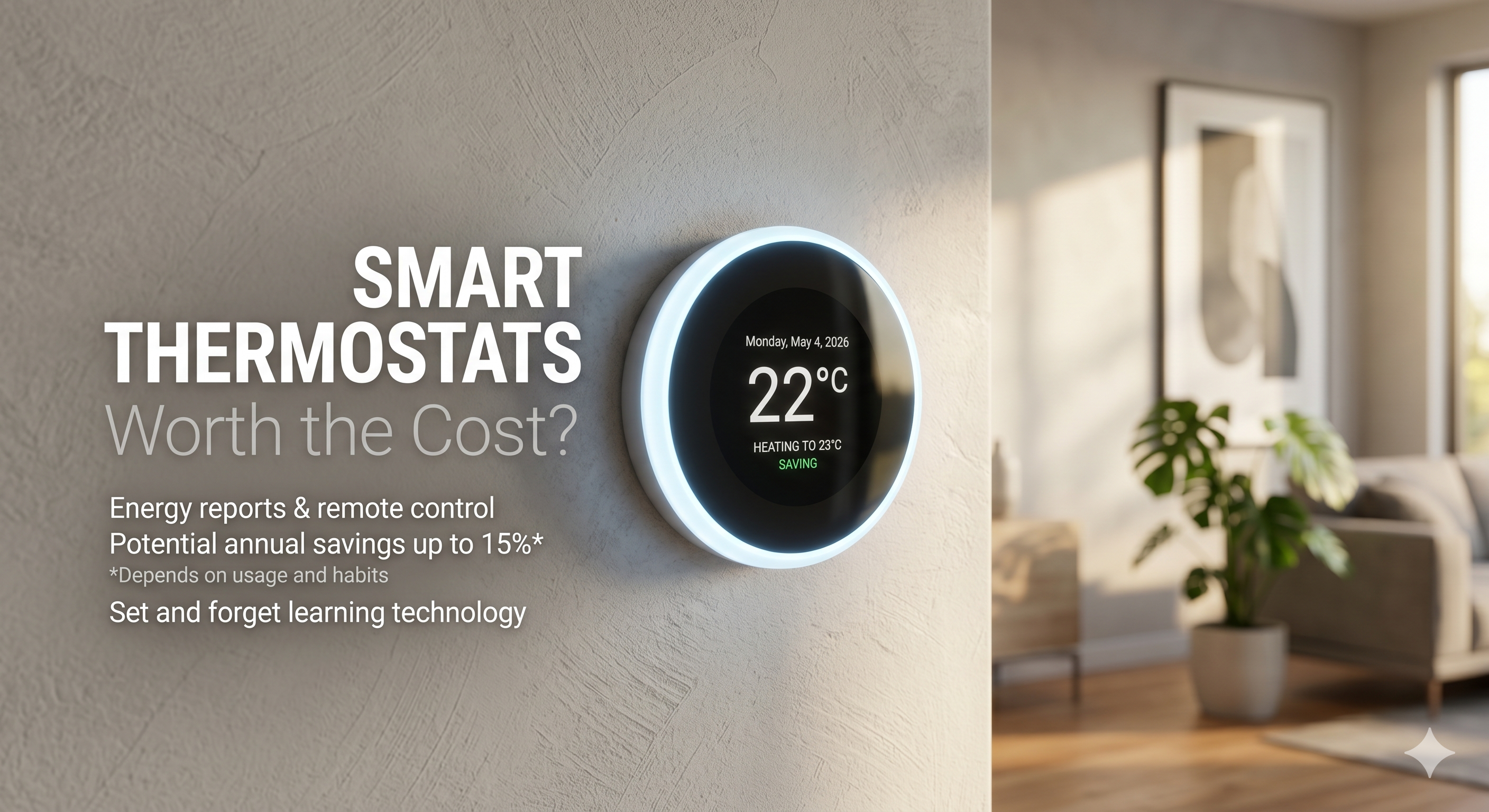
- Significant Energy Savings: On average, users can reduce heating and cooling bills by up to twenty percent. Over a year, this adds up to hundreds of dollars saved.
- Total Remote Control: Forget to turn off the AC before leaving for vacation? You can adjust the temperature from anywhere in the world using your smartphone.
- Learning Algorithms: These devices are proactive. They adapt to your daily routines effortlessly, sensing when you arrive and when you leave.
- Detailed Energy Reports: Knowledge is power. Track your usage with detailed monthly breakdowns that show you exactly where your money is going.
- Seamless Smart Integration: Your thermostat shouldn’t work alone. It works perfectly with other home automation systems to create a holistic environment.
1. The Industry Standard: Google Nest Learning Thermostat
Smart Thermostat Worth It? This device pioneered the smart climate control industry and remains a fan favorite for its simplicity and intelligence. It features a beautiful, metallic design and an intuitive interface that anyone can master.
The Everglow Perspective: What sets this model apart is that it programs itself within a week. You never have to manually adjust it again because it “watches” your movements and temperature preferences. Check out the Google Nest Learning Thermostat for unparalleled efficiency. In our experience, the “Early-On” feature is a standout, ensuring your home reaches the target temperature exactly when you walk through the door, not an hour later.
2. The Premium Experience: ecobee Smart Thermostat Premium
If you want more than just temperature control, such as built-in air quality monitoring and advanced sensors, this is the choice for you.
Our Real-World Insight: Consider the ecobee Smart Thermostat Premium for whole-home comfort. Unlike other models, it includes a smart sensor for remote rooms. This is vital for houses where the thermostat is in a hallway but the bedroom stays too cold. Additionally, it doubles as a smart speaker with Alexa built-in, allowing you to control your entire home with your voice.
3. The Affordable Alternative: SwitchBot Smart Hygrometer
You do not need to spend hundreds of dollars to start monitoring and saving energy. Budget-friendly models offer exceptional value for those starting their smart home journey.
The Value Verdict: Grab the SwitchBot Smart Hygrometer system to monitor your home climate cheaply. While it isn’t a full HVAC controller, it provides precise temperature and humidity readings instantly to your phone. This allows you to identify “cold spots” or humidity issues that cause your HVAC to work harder than necessary, providing a low-cost entry point into energy management.
Calculating Your Return on Investment (ROI)
The most common barrier to entry is the upfront price. The initial cost of a smart thermostat typically ranges from one hundred to two hundred and fifty dollars. To a budget-conscious homeowner, this might seem steep.
However, the math tells a different story. Most households save around one hundred and thirty dollars annually on their utility bills. Therefore, the device pays for itself in under two years. When you consider that these devices last ten years or more, the long-term profit is undeniable. Furthermore, many utility companies offer significant rebates, sometimes covering up to 100% of the cost, because they want to reduce the load on the electrical grid during peak hours.
Maximizing Efficiency Through Integration
A truly smart home is an ecosystem where devices talk to each other. For the ultimate energy-saving setup, link your thermostat to your smart blinds.
The Synergy Effect: During the hottest part of a summer day, your blinds can close automatically based on the thermostat’s light sensors. This reduces the cooling load on your HVAC system dramatically. By preventing “greenhouse heating” through your windows, your air conditioner doesn’t have to work nearly as hard. It creates a truly intelligent, energy-efficient home environment that saves you money while you sleep.
Common Installation Mistakes to Avoid
Even the best technology fails if installed incorrectly. To ensure you get the savings you expect, avoid these pitfalls:
- Ignoring the C-Wire: Smart thermostats need constant power for their Wi-Fi and screens. Ensure your system has a “common wire” (C-wire). If not, you may need a power adapter kit.
- Poor Placement: Never install the thermostat in direct sunlight, near a fireplace, or in a drafty hallway. This causes “ghost readings,” making the system run when it doesn’t need to.
- Skipping the Initial Schedule: While learning algorithms are great, taking ten minutes to set up your basic preferences correctly on day one will accelerate your savings.
- Forgetting HVAC Maintenance: A smart thermostat cannot fix a dirty filter. Change your HVAC filters regularly to ensure the system runs at optimal performance.
Stop throwing money out the window with a system that doesn’t understand your needs. A smart thermostat is one of the few tech purchases that literally pays you back. It combines unparalleled convenience with a robust contribution to a sustainable planet.
Upgrade your climate control system today. To explore more about the science of saving, learn more about energy efficiency at the Department of Energy.
Ready to start saving and making your home a sanctuary of efficiency? Explore more tips and deep dives on our homepage.