Smart Bathroom Devices for Comfort, Hygiene, and Efficiency
Disclosure: This post contains affiliate links. If you make a purchase, we may earn a commission at no extra cost to you. Read our full Disclaimer.
Smart bathroom devices are transforming how homeowners experience comfort, hygiene, and efficiency every day. What was once a purely functional space is now an intelligent environment designed to improve wellness, reduce water waste, and simplify routines.
From smart showers to motion-sensor faucets, these devices adapt to your daily habits. Integrating them properly can improve home automation, save water, and create a more hygienic environment.
In this guide, we explore smart bathroom devices, their benefits, and step-by-step integration for any modern home.
Smart Bathroom Devices for Comfort, Hygiene, and Efficiency
Bathrooms are among the most frequently used spaces in any house. Therefore, even small improvements can significantly impact comfort, hygiene, and sustainability.
Comfort and Automation
First of all, smart bathroom devices introduce automation that simplifies daily life. For example, smart showers allow you to pre-set your ideal water temperature. Meanwhile, motion-sensor lighting turns on automatically when you enter the room.
As a result, your morning routine becomes smoother and more efficient. Instead of adjusting settings manually, the environment adapts to you.
Moreover, when integrated with a broader system explained in What Is a Smart Home and How Does It Work?, these devices can sync with voice assistants or automation schedules.
Hygiene and Health Benefits
Hygiene has become a priority for homeowners worldwide. Fortunately, many smart bathroom devices are designed to reduce contact and improve sanitation.
For instance:
- Touchless faucets minimize germ transmission
- Smart toilets include automatic flushing and self-cleaning features
- UV sterilization in some smart mirrors reduces bacteria
According to the World Health Organization, improved hygiene practices significantly reduce health risks in residential environments. Therefore, contactless technology isn’t just convenient, it’s preventative.
Water Efficiency and Sustainability
Bathrooms account for a large percentage of household water consumption. However, intelligent systems help reduce waste dramatically.
Smart showers can:
- Monitor water usage
- Set time limits
- Automatically stop flow when not in use
Similarly, smart leak detectors alert homeowners before small issues become expensive repairs.
The International Water Association highlights the importance of efficient residential water management globally. Consequently, integrating water-saving technologies contributes to both cost savings and environmental responsibility.
Essential Smart Bathroom Devices for Homeowners
Let’s explore the most impactful upgrades available today.
Smart Mirrors
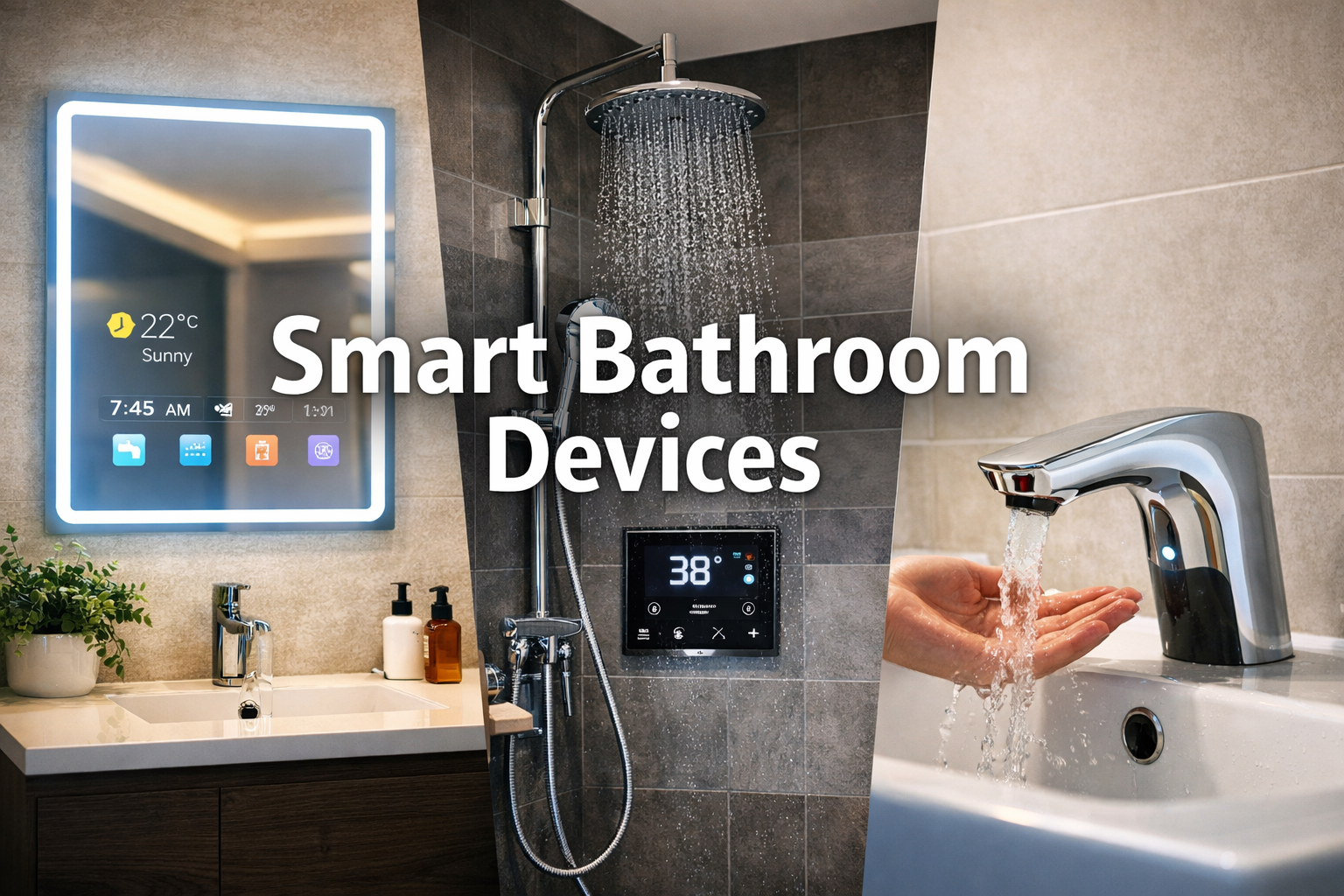
Smart mirrors go far beyond reflection. Many models include:
- LED adjustable lighting
- Built-in weather updates
- Touchscreen displays
- Bluetooth speakers
Additionally, some advanced versions display energy or weather data connected to your broader smart ecosystem.
When combined with automation systems discussed in Smart Gadgets , smart mirrors become part of a fully synchronized lifestyle.
Smart Showers
Smart showers are one of the most transformative smart bathroom devices available.
They allow you to:
- Control temperature via smartphone
- Set shower duration
- Track water usage
- Activate remotely before entering
Consequently, you eliminate wasted water while maximizing comfort.
Although installation costs can be higher than traditional systems, long-term savings often justify the investment.
Smart Toilets
Smart toilets are becoming increasingly popular in modern homes worldwide.
Common features include:
- Heated seats
- Automatic lid opening
- Built-in bidet functionality
- Self-cleaning mechanisms
- Deodorizing systems
Because hygiene is automated, maintenance becomes easier. Moreover, water-efficient flushing systems reduce consumption compared to older models.
Motion Sensor Faucets
These devices are simple yet highly effective. Motion sensors prevent unnecessary water flow and reduce contact surfaces.
As a result:
- Water bills decrease
- Hygiene improves
- Daily convenience increases
They are also among the most affordable entry-level smart bathroom devices.
Smart Lighting for Bathrooms
Lighting dramatically influences comfort. Smart LED systems allow:
- Adjustable brightness
- Color temperature control
- Automatic night mode
- Energy scheduling
When integrated with systems mentioned in Smart Home Energy Management, smart lighting optimizes electricity usage while maintaining ideal visibility.
How to Integrate Smart Bathroom Technology Step by Step
Upgrading your bathroom doesn’t need to be overwhelming. Follow this structured approach:
Step 1: Assess Your Needs
Begin by identifying priorities:
- Do you want better hygiene?
- Lower water consumption?
- Improved comfort?
Clear goals prevent unnecessary purchases.
Step 2: Check Compatibility
If you already use systems from Smart Home Security Devices or other smart hubs, verify compatibility.
Most modern devices integrate via Wi-Fi or Zigbee. However, always confirm before purchasing.
Research published on arXiv shows that interoperability remains crucial for smart home efficiency.
Step 3: Start with High-Impact Devices
If budget is limited, begin with:
- Motion sensor faucets
- Smart lighting
- Leak detection systems
Later, expand into smart showers or toilets.
Step 4: Professional vs DIY Installation
Some devices, such as smart mirrors or lighting, are DIY-friendly. Conversely, plumbing-related installations often require professionals.
Although upfront costs may increase, proper installation prevents long-term damage.
Best Practices for Maintenance and Optimization
To ensure longevity:
- Regularly update firmware
- Clean sensors gently
- Monitor water usage data
- Schedule periodic inspections
Additionally, integrate bathroom systems with your broader Smart Living / Daily Routines strategy to maximize benefits.
Consistency is key. Without monitoring, even smart systems lose effectiveness.
Frequently Asked Questions About Smart Bathroom Devices
Are smart bathroom devices worth the investment?
Yes, particularly for homeowners seeking comfort, hygiene, and sustainability. Although initial costs exist, savings and lifestyle improvements often outweigh them.
Do they significantly reduce water usage?
Absolutely. Smart showers and faucets can reduce water waste by monitoring flow and duration automatically.
Can I install them in older homes?
In most cases, yes. However, plumbing upgrades may be necessary for advanced installations.
Are smart bathrooms secure?
Security depends on proper network configuration. Use strong passwords and secure Wi-Fi systems, especially if devices connect to cloud platforms.
Smart bathroom devices are no longer luxury add-ons, they are practical tools for improving daily routines, hygiene, and sustainability. When thoughtfully integrated, they enhance comfort while reducing resource waste.
Moreover, as smart homes become increasingly interconnected, the bathroom plays a crucial role in the overall ecosystem. Even small upgrades can deliver meaningful results.
Are you ready to upgrade your lifestyle? Discover more smart living insights in our next article.