What Is a Smart Home: Complete Guide for US Homes
Disclosure: This post contains affiliate links. If you make a purchase, we may earn a commission at no extra cost to you. Read our full Disclaimer.
What Is a Smart Home and How Does It Work?
A smart home is a residence equipped with networked devices that can be controlled remotely or automated to enhance comfort, security, and energy efficiency. From voice-controlled lighting to smart thermostats, these systems provide homeowners and renters in the United States with unprecedented convenience and control over their living environment.
Smart homes are more than just gadgets. They represent a shift toward intelligent, automated living where devices communicate, adapt, and respond to user behavior. According to the U.S. Energy Information Administration, integrating smart home devices can lead to measurable reductions in energy use and more efficient management of household systems.
Understanding what is a smart home is the first step toward designing a connected, efficient, and comfortable living space.
Key Components of a Smart Home
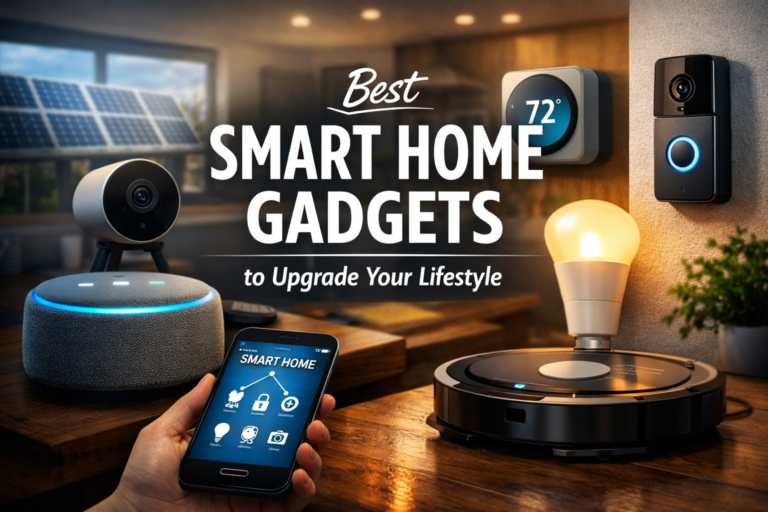
A smart home integrates multiple systems and devices, which can include:
Smart Lighting Systems
Automated lights can turn on/off based on occupancy, schedules, or even natural light levels. Integrating smart lighting with smart plugs for energy saving allows further control over electronics that consume standby power.
Smart Thermostats
Smart thermostats for energy efficiency adjust temperatures automatically based on your schedule, location, and occupancy. Popular options include the Google Nest Learning Thermostat, which learns your routines, and the ecobee Smart Thermostat Premium, which uses room sensors to optimize comfort and energy savings.
Security and Surveillance Systems
Smart cameras, locks, and alarms can be monitored remotely. Devices like smart doorbells notify you instantly if visitors arrive, enhancing both security and convenience.
Voice Assistants and Hubs
Smart speakers like Amazon Echo or Google Nest Hub act as control centers, allowing voice commands to manage multiple devices, check weather, or automate routines. This complements voice control smart home setup guides.
Entertainment and Appliances
Smart TVs, speakers, and connected appliances allow centralized control and automation, providing convenience while often reducing energy consumption.
How a Smart Home Works
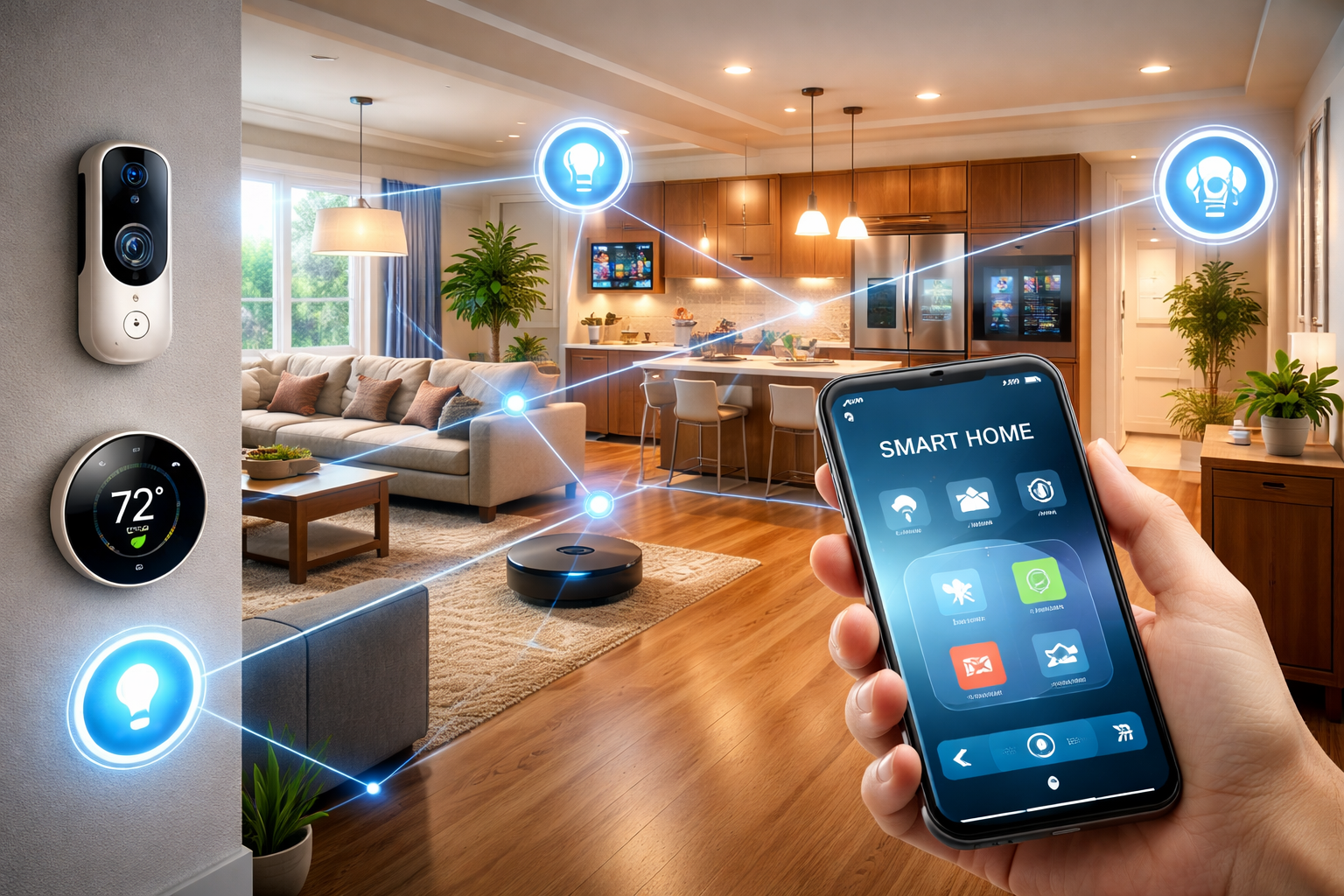
Smart homes rely on a combination of connectivity, automation, and interoperability:
- Connectivity: Devices are connected via Wi-Fi, Zigbee, Z-Wave, or Bluetooth networks.
- Sensors and Inputs: Motion, temperature, light, and other sensors collect data.
- Automation: Devices react to triggers (time, presence, environment).
- Control: Homeowners manage devices through apps, voice commands, or automation rules.
For instance, leaving home can automatically:
- Arm the security system
- Lower the thermostat to save energy
- Turn off lights and unused appliances
This ecosystem approach maximizes efficiency and convenience, reducing human error.
Benefits of a Smart Home
Smart homes offer advantages in three main areas:
Comfort and Convenience
Automated routines, voice commands, and mobile control make everyday tasks seamless. Your home learns your preferences and adjusts lighting, climate, and entertainment automatically.
Energy Efficiency and Cost Savings
By optimizing HVAC, lighting, and appliance usage, smart homes can significantly reduce energy waste. According to the American Council for an Energy-Efficient Economy, automation can reduce residential energy consumption by up to 15% annually.
Security and Safety
Real-time monitoring, automated locks, and remote notifications enhance home security. Integrated smoke, CO2, and water leak sensors protect your property and family.
Examples of Smart Home Devices
Here are examples naturally integrated for readers:
- Google Nest Learning Thermostat – adapts to your schedule, improves comfort, and reduces energy use.
- ecobee Smart Thermostat Premium – uses multiple sensors for room-specific climate control.
- Amazon Smart Thermostat – budget-friendly option with ENERGY STAR certification.
Other devices include smart locks, automated lighting, cameras, and voice assistants.
How to Build a Smart Home
Step 1: Start with a Hub or Voice Assistant
Centralized control simplifies integration. Choose a hub compatible with most devices in your ecosystem.
Step 2: Automate Lighting and Climate
Install smart bulbs, plugs, and thermostats. Use geofencing or schedules for energy savings.
Step 3: Add Security Devices
Integrate cameras, alarms, and locks. Many systems allow alerts on smartphones.
Step 4: Expand Gradually
Add appliances, entertainment systems, and sensors as you learn what devices enhance your lifestyle most.
Pros and Cons of Smart Homes
Pros
- Convenience and comfort
- Energy savings and efficiency
- Enhanced security
- Remote monitoring
- Increased property value
Cons
- High upfront cost
- Learning curve for device integration
- Dependency on internet and Wi-Fi
- Data privacy concerns
Despite minor drawbacks, the benefits usually outweigh the challenges, especially in modern homes.
Common Smart Home Integrations
- Smart plugs for energy saving – control small appliances remotely
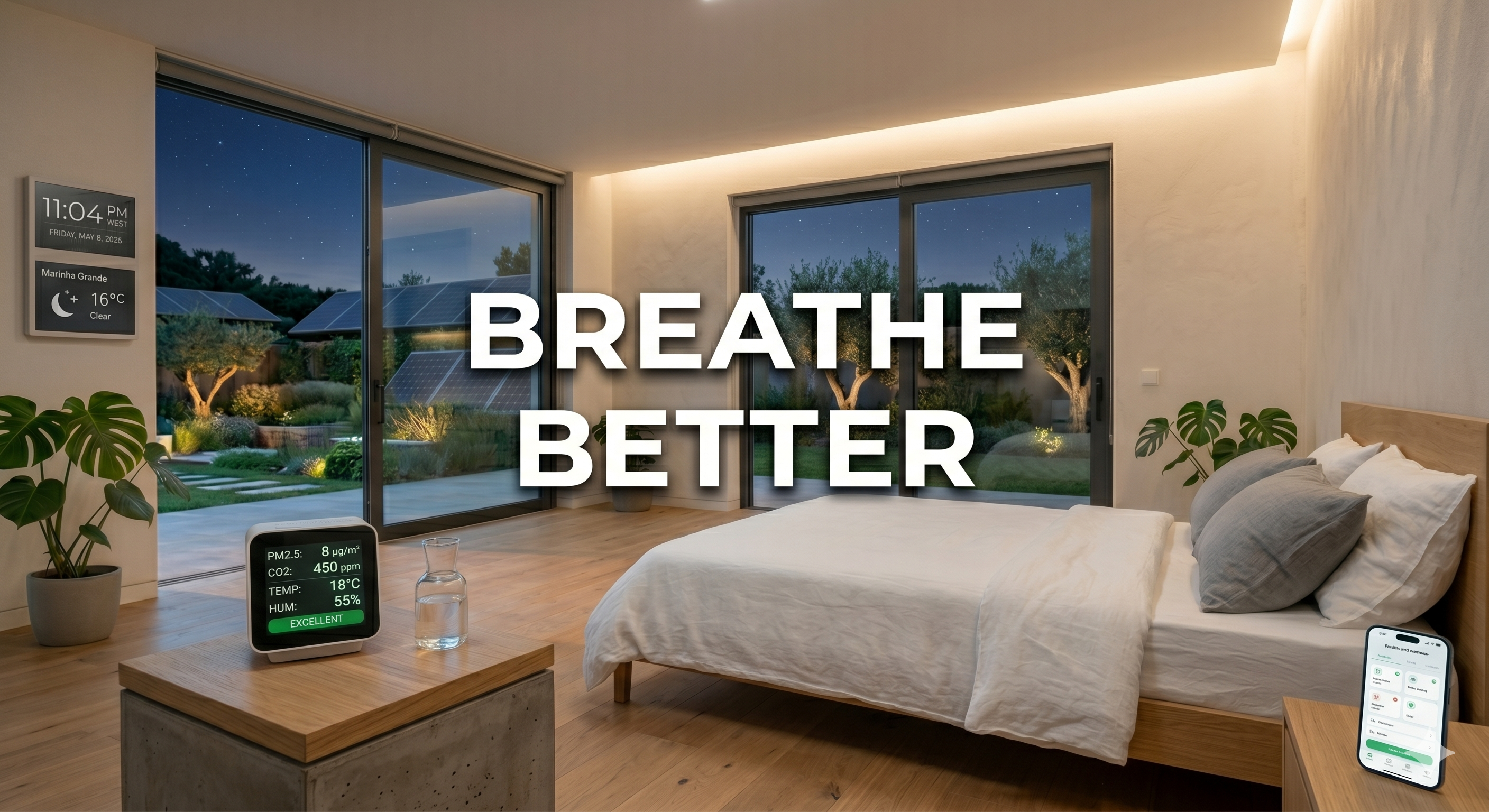
- Smart bedroom devices for better sleep – automate lighting and climate
- Smart lighting automation guide – create scenes and schedules
- Voice control smart home setup – centralize commands via voice assistants
FAQ: What Is a Smart Home?
What is a smart home in simple terms?
A smart home uses connected devices and automation to manage lighting, climate, security, and entertainment intelligently.
Do smart homes save money?
Yes. Automation reduces energy waste, leading to savings on electricity and HVAC costs.
Are smart homes safe?
When properly secured with strong passwords and updated devices, smart homes are safe and reliable.
Do smart homes work without the internet?
Some basic automation continues offline, but remote control and cloud-based features require connectivity.
A smart home enhances comfort, efficiency, and security through intelligent automation. By understanding what is a smart home and how it works, homeowners and renters can make informed decisions, gradually building an ecosystem that improves daily life.
Are you ready to upgrade your lifestyle? Discover more smart living insights in our next article.