Smart Thermostats for Energy Efficiency
Disclosure: This post contains affiliate links. If you make a purchase, we may earn a commission at no extra cost to you. Read our full Disclaimer.
The Complete Guide for US Homes
Smart thermostats for energy efficiency are one of the most practical upgrades homeowners and renters in the United States can make to reduce utility bills and improve comfort year-round. By learning your daily routine and automatically adjusting temperatures, these devices eliminate wasted energy without sacrificing convenience.
Heating and cooling account for a large portion of residential energy consumption in the U.S. According to the U.S. Energy Information Administration, space heating and air conditioning represent a significant share of household energy use. That makes climate control the most effective area to save money and energy.
If you’ve already explored what is a smart home, upgrading your thermostat is a natural next step to make your home smarter and more efficient.
Why Smart Thermostats for Energy Efficiency Are Essential
Energy costs fluctuate widely across the United States. Homes in Texas and Florida rely heavily on air conditioning, while properties in the Midwest and Northeast depend on heating during winter.
Smart thermostats reduce unnecessary runtime by:
- Adjusting temperatures automatically while you sleep
- Switching to eco mode when the house is empty
- Detecting occupancy in real time
- Generating detailed energy usage reports
Unlike traditional programmable thermostats, smart systems adapt continuously instead of following fixed schedules.
How Smart Thermostats for Energy Efficiency Work
Smart thermostats connect to Wi-Fi and communicate directly with your HVAC system. Once installed, they monitor patterns and optimize heating or cooling automatically.
Most systems use:
- Motion and occupancy sensors
- Behavioral learning algorithms
- Outdoor weather data
- Smartphone geolocation (geofencing)
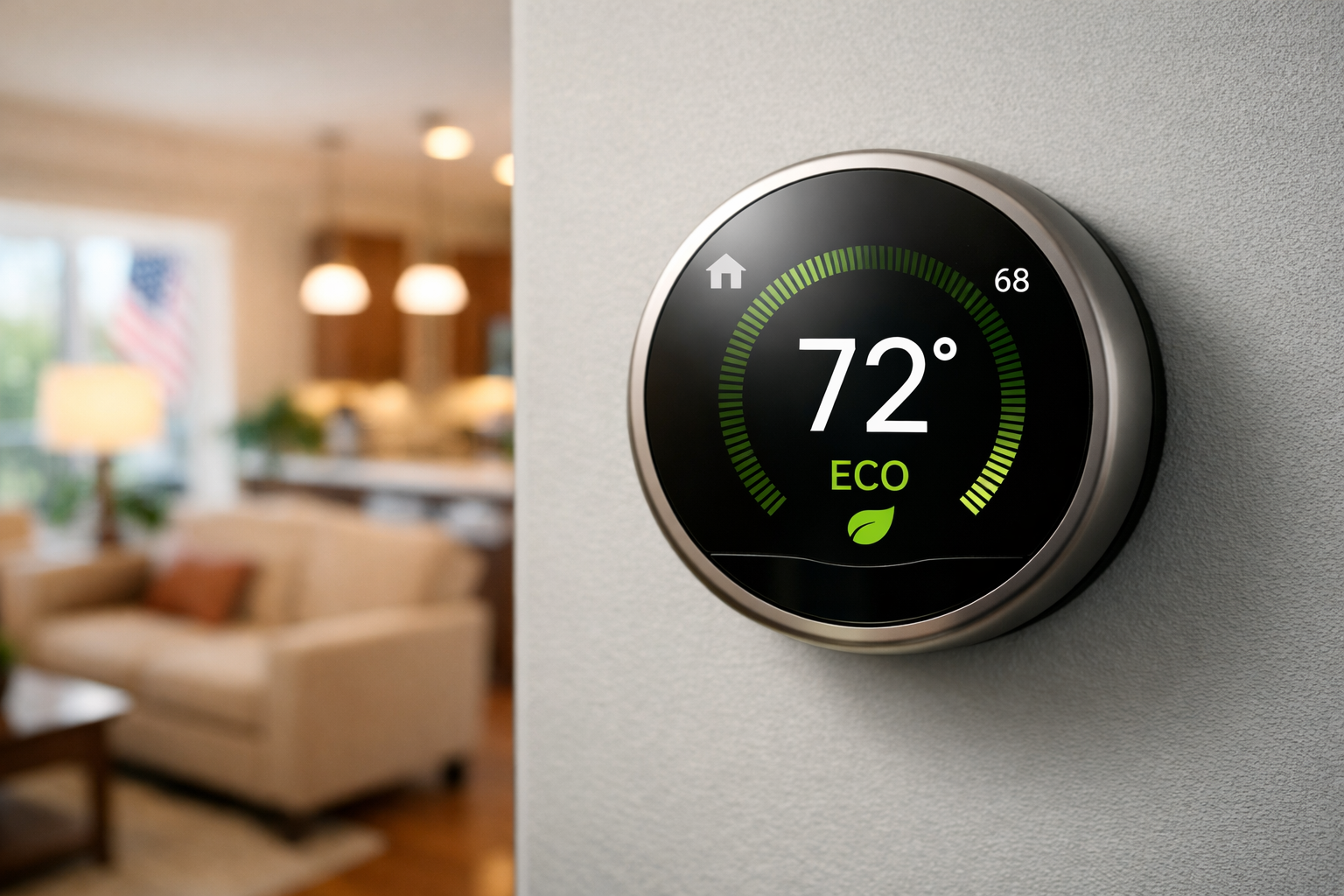
For example, the Google Nest Learning Thermostat automatically builds a schedule based on your behavior. Over time, it fine-tunes energy usage without requiring constant manual adjustments.
Smart thermostats often integrate with voice assistants, allowing homeowners to control temperatures via Amazon Alexa or Google Assistant. This integration is a perfect complement to voice control smart home setup guides.
Key Features of Smart Thermostats for Energy Efficiency
When choosing smart thermostats for energy efficiency, prioritize these capabilities:
Learning Algorithms
Devices that learn your schedule remove the need for constant programming, making energy management effortless.
Geofencing
Geofencing detects when your smartphone leaves home and automatically switches the thermostat to eco mode.
The ecobee Smart Thermostat Premium enhances this with multiple room sensors, ensuring that energy is used only where needed, balancing comfort and savings.
ENERGY STAR Certification
The U.S. Environmental Protection Agency administers the ENERGY STAR program, certifying devices that meet strict efficiency standards. Choosing certified thermostats increases long-term savings and environmental benefits.
Energy Reporting
Most modern devices provide monthly reports showing:
- Peak usage periods
- Runtime trends
- Optimization tips
These insights help homeowners refine their energy strategy for maximum efficiency.
Real Energy Savings with Smart Thermostats for Efficiency
According to the U.S. Department of Energy, properly managing thermostat settings can save homeowners up to 10% annually on heating and cooling costs.
Research from the American Council for an Energy-Efficient Economy also highlights smart climate automation as one of the most effective ways to reduce household energy consumption.
Actual savings vary depending on:
- Climate zone
- Insulation quality
- HVAC efficiency
- Personal usage patterns
Most households see measurable reductions within the first year, making this a high-return home investment.
Comparing Smart Thermostats for Energy Efficiency vs Traditional Thermostats
Traditional thermostats rely entirely on manual input, even programmable models follow fixed schedules.
Smart thermostats for energy efficiency:
- Adapt dynamically to behavior
- Provide remote smartphone control
- Integrate with smart lighting automation guide systems
- Sync with smart home security devices for more comprehensive automation
For those on a smaller budget, the Smart Thermostat offers ENERGY STAR certification and reliable automation features at an accessible price point. This ensures that homeowners or renters can start saving energy without major upfront costs.
Pros and Cons of Smart Thermostats
Balanced evaluation builds credibility:
Pros
- Lower utility bills
- Automated comfort
- Reduced environmental impact
- Remote control access
- Integration with broader smart home systems
Cons
- Higher upfront cost
- Requires stable Wi-Fi
- Possible compatibility issues with older HVAC systems
- Data privacy considerations
Most drawbacks can be mitigated with proper installation and security practices.
Installation Considerations
Many smart thermostats are DIY-friendly, but professional installation may be needed if:
- Your HVAC system lacks a C-wire
- You have multi-stage heating/cooling
- You are unsure about wiring
Renters should always confirm landlord approval before wall-mounted installations.
Maximizing Efficiency
To get the most from smart thermostats for energy efficiency:
- Enable learning mode
- Set eco temperature ranges
- Seal windows and air leaks
- Use ceiling fans in combination with thermostats
- Keep firmware updated
Small changes compound over time, creating consistent energy savings.
Integrating Smart Thermostats for Energy Efficiency Into Your Smart Home
Smart thermostats become more powerful when connected with:
- Smart plugs for energy saving
- Voice control smart home setup
- Smart bedroom devices for better sleep
For example:
- Leaving home activates eco mode automatically.
- Security systems arm themselves.
- Lights turn off simultaneously.
This interconnected system maximizes efficiency and convenience.
FAQ: Smart Thermostats for Energy Efficiency
Do smart thermostats really save money?
Yes. Most U.S. households see measurable savings within the first year.
Are rebates available?
Many utility providers offer rebates for ENERGY STAR-certified models.
Do they work without internet?
Basic temperature control continues, but remote features require Wi-Fi.
Are smart thermostats secure?
Yes, when connected to secure networks and updated firmware.
Smart thermostats for energy efficiency are one of the smartest investments for modern American homes. Backed by research from U.S. government agencies and energy experts, these devices reduce waste, improve comfort, and integrate seamlessly into broader smart home ecosystems. Whether you are a homeowner or renter, automating climate control is a scalable, practical, and cost-effective step toward smarter living.
Are you ready to upgrade your lifestyle? Discover more smart living insights in our next article.